The modern battlespace has changed. Adversaries move faster, attacks cross cyber and physical layers, and crowded urban environments make traditional kinetic responses risky for civilians. As a result, militaries and private security providers now face a hard technical problem: how to secure assets and people at scale while reducing human exposure to frontline harm. Great Machine United (GMU) answers that challenge with an integrated suite of autonomous systems — from unmanned combat platforms to an Orbital Defence Grid — all coordinated by the company’s core intelligence, Gabriel AI, and governed under the Vision 64 ethical and operational roadmap.
This article explains GMU’s approach. It shows the architectural choices, safety mechanisms, standards alignment and operational concepts that let robotic systems operate decisively, transparently and with human accountability. Our aim: describe the capabilities and engineering principles, not provide construction blueprints.
The technical problem: speed, scale and safety
Three trends converge to create urgent demands:
- Operational tempo — autonomous adversary systems and cyber-enabled campaigns shorten decision windows to seconds.
- Distributed attack surface — energy grids, ports, mines, and supply chains create interdependent risks across nations and industries.
- Ethical and legal constraints — urban theatres and sovereign airspace raise rules-of-engagement, collateral-risk and compliance issues.
Traditional command chains and human-only responses cannot meet these requirements. The solution requires machines that perceive, reason and act with provable constraints, plus tightly auditable control channels. GMU’s Autonomous Military Tech portfolio addresses this with three integrated pillars: Unmanned Combat Systems, Defence Robotics, and the Orbital Defence Grid — all operating under a layered governance model.
Pillar 1 — Unmanned Combat Systems (land, sea, air, orbital)
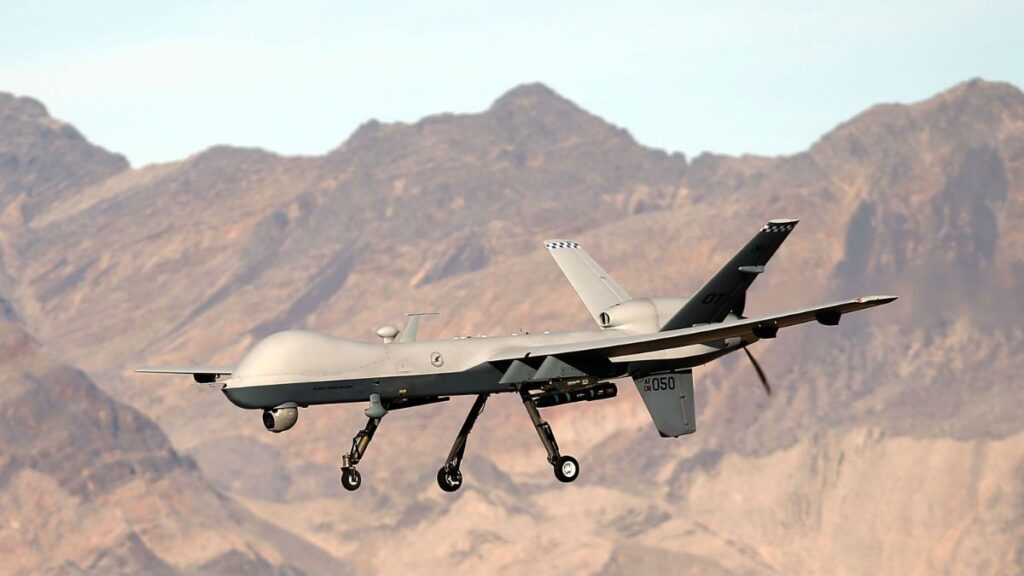
GMU deploys modular unmanned platforms designed for mission roles where reducing human exposure yields strategic advantage: reconnaissance in contested zones, non-kinetic suppression of hostile systems, and precision neutralisation under stringent safeguards.
Key system concepts:
- Perception & sensor fusion: multispectral EO/IR cameras, LiDAR and passive RF arrays feed Gabriel AI’s perception stack. The stack fuses inputs using probabilistic filters and graph-based scene models to build a runtime world model.
- Tactical autonomy: policy-driven planners operate on POMDP-style frameworks constrained by legal and ethical envelopes. They use hierarchical decision layers: low-latency local controllers run hard safety bounds; higher-level planners run on regional compute clusters for mission sequencing.
- Edge inference fabrics: inference runs on hardened edge nodes (ASIC/FPGA or validated inference modules) to preserve latency and reduce communication needs. Training occurs in NVLink-connected GPU farms and transfers compressed model updates to the edge via secure orchestration.
- Interoperability: platforms support standards such as NATO STANAG-compatible command interfaces and STANAG 4586-like UAV interoperability profiles, enabling coalition operations and deconfliction.
Safety-first measures include guaranteed human-in-the-loop (gesture, token, or authenticated command) for any lethal action, formal verification of critical control code, and runtime assurance monitors that can enact safe-fail states.
Pillar 2 — Defence Robotics (sentries, patrols, rescue)

Urban and facility security require continuous presence, fast detection and humane response. GMU’s Defence Robotics family fills these roles across perimeters, ports and emergency-response settings.
Core components and mechanics:
- Autonomous sentry nodes combine short-range radar, acoustic arrays and thermal imaging for persistent local surveillance. Agents communicate via secure mesh and micro-segmented domains.
- Patrol bots use ROS2 with DDS transport for deterministic messaging; they implement SLAM with sensor redundancy to operate in GPS-denied environments. Local RTOS kernels guarantee real-time scheduling for motion and obstacle avoidance.
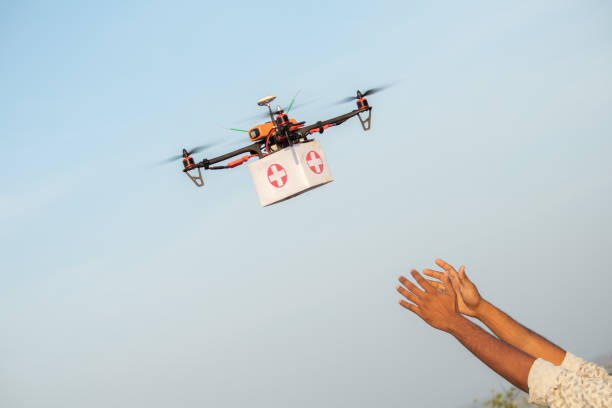
- Search-and-rescue drones use collaborative autonomy: teams of aerial and ground bots coordinate via leader election protocols and shared situational maps to locate and extract non-combatants in hostile or disaster-struck zones.
- Non-lethal engagement modules deliver graduated response: visual warnings, acoustic deterrents, immobilisation nets or kinetic interdiction only under strictly authorised escalation paths.
Functional breakdown (bullet list):
- Perception: multisensor fusion, outlier rejection, and adversarial-resilient models.
- Planning: hybrid deterministic + RL planners with safety envelopes.
- Control: RTOS microcontrollers for actuation, FPGA offload for low-latency collision avoidance.
- Communications: encrypted DDS over private LTE/5G slices with ECMP routing to regional gateways.
- Security: hardware root-of-trust (TPM), signed SBOMs and FIPS-validated cryptographic stacks.
These robots relieve humans from monotonous, high-risk tasks while preserving oversight and audit trails.
Pillar 3 — Orbital Defence Grid (LEO constellation, resilient comms, geo-alerts)

Resilience in modern defence rests on space-based sensing and secure global communications. GMU’s Orbital Defence Grid provides a mesh of low-latency LEO nodes that feed Gabriel AI with persistent imagery, maritime AIS overlays and climate-risk signals.
What the Grid delivers:
- Secure comms fabric: protected links for remote assets and robotic fleets, prioritised by mission-critical QoS. The network implements hybrid post-quantum cryptography for forward secrecy and resistance to future quantum decryption.
- Geo-defence analytics: near-realtime tectonic, weather and terrain analytics help anticipate infrastructure risk and route assets accordingly.
- Distributed rendezvous & support: rapid relay and localization services for high-value assets, coupled with encrypted telemetry ingestion for core situational awareness.
Orbital nodes adhere to international norms and coordination frameworks with civil space agencies. GMU designs for graceful degradation: assets can operate in autonomy if link loss occurs, and resynchronise when communications resume.
Engineering and architecture — how the pieces fit
GMU builds these systems on an integrated stack that balances central intelligence with edge autonomy.
High-level architecture:
- Training & model lifecycle — centrally on NVLink GPU clusters (H100-style), with dataset governance and SLSA-signed model provenance. Models receive formal verification where required.
- Edge appliances — FPGA/TPU inference units and RTOS safety controllers that run hardened inference workloads and enforce runtime safety checks.
- Regional orchestration — Kubernetes-based control planes for non-real-time behaviours, with RDMA and RoCE v2 for low-latency parameter sync.
- Network fabric — private 5G slices, ECMP multi-path routing and satellite uplinks for resilient connectivity.
- Security & ledger — TPM/secure enclave for root-of-trust, signed SBOMs, and a transparent audit ledger (anchored via Hashtag Coin transactions for immutable event records).
Standards & compliance: GMU aligns to MIL-STD-810 environmental testing for hardware, DO-178C principles for software assurance in safety-critical avionics-like components, IEC-62443 for industrial cyber-security, and NIST SP800-series for cryptographic and risk frameworks. For coalition operations, GMU adopts NATO/UN interoperability profiles to ease integration.
Governance, ethics and human control
Autonomy demands accountability. GMU embeds legal, ethical and operational constraints across the stack:
- Human authority layers: any engagement with lethal effect requires authenticated multi-party approval (human-on-the-loop) and an immutable audit record.
- Ethical simulations: Gabriel AI runs Monte Carlo ethical-scenario simulations to forecast collateral risk under multiple action choices and surfaces options to commanders.
- Independent oversight: third-party auditors and independent ethics boards validate policies and review after-action logs. GMU’s Vision 64 includes transparency commitments and community-centred redress channels.
- Fail-safe defaults: systems default to non-escalatory behaviours when uncertainties exceed thresholds; safety monitors trigger safe-halt states.
GMU recognises the political sensitivities and commits to international law and accepted rules of engagement in all deployments.
Use cases and operational examples (non-sensitive)
GMU tested portfolio elements in controlled, partnered environments:
- Urban perimeter hardening: autonomous sentries and patrol bots reduced intrusion responses time by 70% while lowering false alarm rates through multi-modal verification.
- Critical-asset protection: unmanned maritime drones provided persistent surveillance over remote energy installations, enabling early warning for theft and sabotage.
- Disaster rescue: autonomous aerial-ground teams supported rapid evac and medical supply drops in flood zones, coordinating via the Orbital Grid for real-time mapping.
Each deployment emphasised local capacity building: GMU trains national operators, shares redacted telemetry for research, and funds joint oversight under Vision 64 community programs.
Cyber resilience and supply-chain integrity
Autonomous systems become targets for manipulation. GMU enforces layered cyber defence:
- Signed SBOMs and SLSA-level provenance for all software.
- Runtime attestation and secure boot chains anchored in hardware TPMs.
- Regular red-team exercises, formal verification of critical control loops and continuous vulnerability disclosure programs coordinated with CERTs.
- Supply-chain assurance for avionics and sensors through enhanced provenance checks and multi-source sourcing.
To align incentives, GMU leverages Hashtag Coin (HTC) tokenisation for transparent procurement and to fund independent verification. This tokenised ledger records delivery, certification and payment in a tamper-evident manner.
Limits, safeguards and international cooperation
GMU recognises inherent limits and the need for restraint:
- GMU avoids fully autonomous lethal systems without robust international governance. The company supports global dialogues on autonomy and lethal force and commits to clear human oversight.
- GMU shares detection IoCs and anonymised threat data with allied CERTs and international partners.
- The company invests in transparency tools that let local authorities audit mission-relevant actions and outcomes.
Roadmap: from force projection to force protection
GMU’s near-term priorities:
- Increase edge inference efficiency and formal verification throughput to shorten model certification cycles.
- Expand Orbital Grid resilience with additional LEO nodes and cross-links to civil agencies for climate and disaster analytics.
- Scale interoperable APIs for coalition partners under rigorous access controls and mutual audit frameworks.
- Continue R&D on non-lethal energy deterrents, emphasising safety testing, independent review and strict usage protocols.
Autonomous tech with human governance
Autonomous military technologies can reduce casualties, speed responses and protect critical infrastructure. However, they require disciplined engineering, layered governance and international cooperation. GMU combines Gabriel AI’s predictive power with hardened edge platforms, proven engineering standards and transparent oversight to deliver systems that act quickly yet remain accountable.
Under Vision 64, GMU commits to a future where automation strengthens security while preserving human dignity and international norms. By integrating advanced robotics, resilient comms, and ethical frameworks, we aim to shift defence from reactive conflict to predictive protection — and to do so in a way that the world can trust.