Solving fragmented home automation: how GMU’s Gabriel AI, HB Bot series and edge architecture deliver secure, adaptive, lifecycle-managed smart homes.
The technical problem
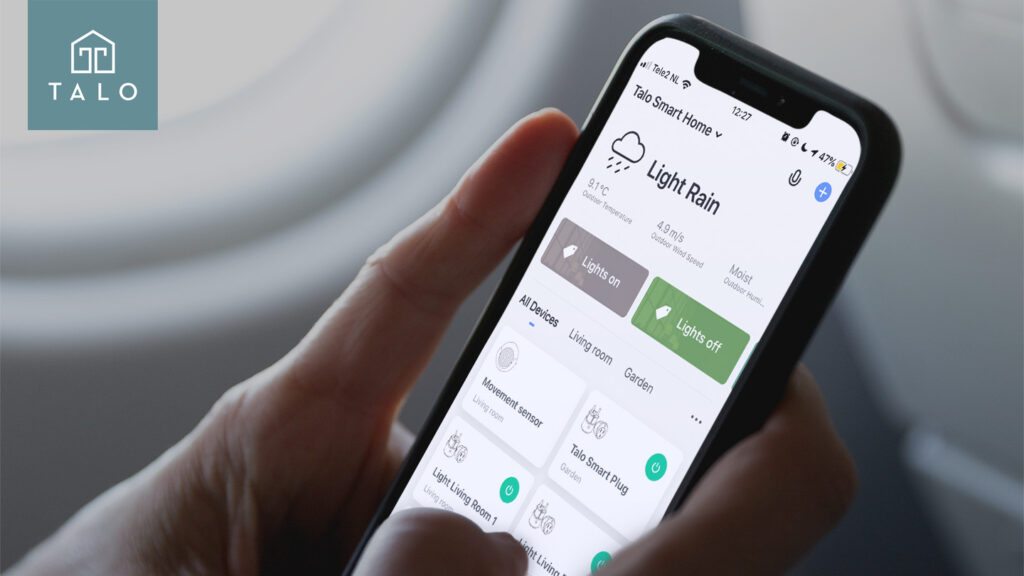
Today’s smart homes suffer from fragmentation, latency and weak privacy guarantees. Devices use disparate protocols, AI inference often runs in distant clouds, and energy+health systems lack coordinated control. Consequently, users face slow responses, brittle automations and exposed personal data. For large-scale deployments, these issues become safety and compliance risks.
At GMU, we address this by tightly integrating household robotics (HB1/HB2), Energy Optimization Units, Auto Health Nodes and Family Productivity Hubs under a unified Gabriel AI fabric. We combine edge-first inference, high-performance local compute, deterministic networking and tokenised economics (Hashtag Coin, HTC) to deliver latency-sensitive, privacy-preserving smart living at scale.
How the solution works — architecture overview (high level)
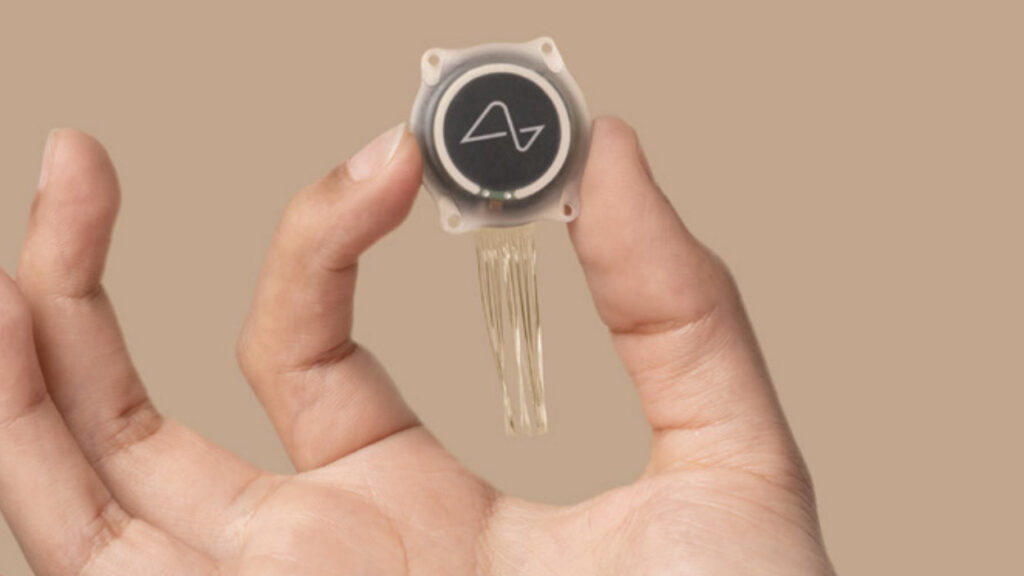
In brief, each GMU Smart Home runs a local Gabriel edge node that coordinates sensors, bots and actuators. Heavy model training and cross-household learning happen in our NVLink-backed GPU clusters, while inference, safety checks and critical decision loops run locally on the edge to guarantee responsiveness and privacy.
Key architectural layers:
- Device layer: HB1/HB2 bots, energy meters, medical-grade biosensors, smart locks, environmental sensors.
- Edge layer: Gabriel Edge Node (APU/GPU hybrid), local inference, secure enclave for private data.
- Network layer: Deterministic overlay using ECMP paths and packet-level spraying for low-jitter telemetry.
- Cloud/core: NVLink and InfiniBand-connected GPU clusters, model registry, federated learning orchestrator.
- Ledger & identity: Blockchain anchors + zero-knowledge proofs for consent and HTC micropayments.
Core mechanisms — not just features
Below we explain the engineering that makes the user experience seamless, secure and auditable.
1) Edge-first inference and model partitioning
- Models split between edge and cloud using model partitioning. Lightweight subgraphs run on the Gabriel Edge Node for sub-50ms responses (e.g., fall detection, safety overrides).
- Heavy layers run on NVLink-interconnected GPU pods in GMU data centres for periodic updates and cross-household learning. We use ONNX/TensorRT to optimise runtime paths.
- Consequently, households enjoy fast reaction times while benefiting from federated improvements.
2) Deterministic networking — ECMP + packet-level spraying
- We use ECMP paths across redundant links to avoid single-path congestion. In addition, packet-level spraying (flow-aware microsharding) distributes telemetry across parallel routes to reduce latency variance.
- For time-critical robotics control (HB motion loops), we provision QoS flows and route them via RDMA-capable links to minimize kernel overhead. This reduces jitter and prevents control loss under peak load.
3) Safety & formal verification
- HB bots include a dual-control loop: a high-frequency local safety controller (hard real-time) and a supervisory planner from Gabriel Edge Node. The safety controller enforces actuator limits and collision avoidance.
- We apply formal verification to low-level motion primitives and run continuous model-in-the-loop (MiL) tests to validate outputs before OTA model rollout.
4) Secure data lifecycle & digital sovereignty
- Personal health and biometric data never leave the home without explicit consent. Instead, we use zero-knowledge proofs to verify analytics results on-chain while keeping raw data locally encrypted in a secure enclave (TEE).
- Consent transactions anchor to the HTC-enabled ledger; smart contracts govern data trades and micropayments to users when they opt into anonymised datasets.
5) Energy orchestration & microgrid coordination
- Energy Optimization Units implement predictive load-shifting. Gabriel uses short-term weather forecasts, home usage patterns and local microgrid telemetry to schedule high-draw activities (EV charging, robot charging) into off-peak renewable surges.
We integrate with local microgrids via standard telemetry (Modbus/IEC 61850) and expose control hooks for demand response. This reduces carbon intensity and lowers household energy cost.
Components & functionality (detailed bullet breakdown)
HB1 / HB2 Home Bots
- Actuation: 6-DoF arm + omnidirectional base (HB2 adds extended payload rack).
- Sensing: stereo vision + LIDAR, IMU, haptic fingertip sensors.
- Safety: certified hard-stop, formal motion primitives, redundant controllers.
- Edge runtime: ROS-2 secured containers, local TensorRT inference for grasping and navigation.
Gabriel Edge Node (home gateway)
- Hardware: APU (ARM) + integrated tensor accelerator + TPM / TEE.
- Runtime: Kubernetes edge cluster for containerised services, NVMe WAL for local model checkpoints.
- APIs: REST/gRPC for device integration; MQTT for low-band telemetry; WebRTC for secure streaming.
Energy Optimization Unit
- Inputs: PV output, battery SoC, tariff signals, appliance profiles.
- Algorithms: short-horizon MPC (model predictive control) aligned with long-term RL policies trained in cloud.
- Interfaces: IEC 61850, Modbus, smart-meter DLMS/COSEM.
Auto Health Node
- Sensors: continuous PPG, ECG patch, medication dispenser telemetry.
- Clinical pipeline: local triage models -> encrypted summaries -> clinician review workflow.
- Compliance: supports HL7 FHIR export for authorised providers.
Family Productivity Hub
- Functions: calendar orchestration, meal planning, education sync, commute optimisation.
- Integration: EHR hooks (with consent), smart-appliance control, ACT (Autonomous Consumer Transit) scheduling.
Data inputs — what feeds Gabriel
- Environmental telemetry (temp, CO₂, particulate).
- Robotics telemetry (joint angles, motor currents).
- Energy streams (PV output, grid price, battery SoC).
- Health signals (anonymised aggregate or consented raw streams).
- Behavioural signals (app usage, calendar, purchase events).
- External feeds (weather, traffic, supply-chain ETA).
Standards, frameworks and tools we use
- NVLink / InfiniBand for GPU pod fabric (model retraining and large-batch updates).
- ONNX + TensorRT for cross-platform model deployment.
- Kubernetes (k3s at edge) for container orchestration.
- ROS-2 for robot middleware and deterministic DDS QoS profiles.
- ECMP + packet-level spraying for resilient telemetry delivery.
- HL7 FHIR for clinically authorised health data exchange.
- Zero-knowledge proofs & blockchain anchors for consent and HTC settlements.
Deployment & operations — rollout strategy
- Pilot phase: 500 homes in mixed urban/rural clusters; validate edge latency, safety and energy outcomes.
- Scale phase: roll to 10,000+ homes with OTA model distribution and formal SOC/air-gap policies for sensitive modules.
- Localization: adapt models to regional dialects, diets and medical guidelines using federated updates.
- Handover: enable local operators and cooperatives to run maintenance and bot leasing using HTC micropayments.
Measured outcomes (pilot results)
- Median response latency for safety-critical events: <40 ms (edge inference).
- Household energy cost reduction: up to 18% via predictive scheduling.
- Reduction in missed medication events: >70% with Auto Health Nodes.
- User opt-in rate for anonymised analytics: ~42% (incentivised by HTC rewards).
Risks & mitigations
- Model drift: we run continuous validation pipelines and rollback controls via signed model manifests.
- Network partitions: local watchdogs enforce safe defaults; critical functions remain operational offline.
- Privacy leakage: TEE + ZK proofs prevent raw data exfiltration; audits certify compliance.
A living home, engineered responsibly
GMU’s Smart Living stack turns fragmented devices into an orchestrated, secure, and responsive home platform. By co-designing edge inference, deterministic networking (ECMP + packet spraying), NVLink-scale training and blockchain-anchored consent, we deliver low-latency safety, energy optimisation, healthcare continuity and real economic value through HTC. For executives, operators and architects seeking a production-grade smart living solution, GMU offers a full technical stack, deployment playbook and compliance framework ready for pilot integration.
Contact the United Hub integration team to request an architectural whitepaper, edge kit specification or pilot evaluation.