Natural disasters move fast. So, must response systems. Governments, NGOs and first-responders routinely face three core technical problems: fragmented sensor feeds, slow logistics, and decision bottlenecks. By the time situational awareness forms, lives and infrastructure have already suffered. Great Machine United (GMU) built a different model — one that combines predictive AI, hardened edge compute, autonomous logistics and pre-staged modular infrastructure to get relief where it matters within 90 minutes. Under Vision 64, Gabriel AI runs that stack, coordinating assets, funding and local partners to turn early warning into immediate action.
This article explains the engineering behind GMU’s Disaster Response & Recovery portfolio. It details the data flows, the compute architecture, the physical response units, and the operational safeguards that make rapid, ethical, and scalable disaster relief possible.
The technical challenge: perception, prediction, and delivery
Three failure modes commonly slow disaster response:
- Perception gaps. Agencies receive data from satellites, social feeds, weather models and in-field sensors, but those streams remain siloed and inconsistent.
- Predictive latency. Models run overnight or in bespoke research clusters; they rarely produce actionable forecasts fast enough for evacuation or pre-positioning.
- Logistics friction. Mobilising trucks, cranes and medical tents takes days, not hours — especially in remote or damaged areas.
GMU designed an end-to-end system to mitigate each failure. Gabriel AI ingests heterogenous signals, runs continuous probabilistic forecasting, then orchestrates pre-positioned assets — drones, autonomous trucks, modular clinics and energy microgrids — using tokenised financing and auditable contracts on Hashtag Coin (HTC). The result shortens response time from days to minutes, while maintaining legal, ethical and operational controls.
System overview: data → prediction → action
GMU’s disaster platform comprises four integrated layers:
- Sensor & ingestion layer — satellites, radar, IoT sensors, public feeds and human reports.
- Prediction & decision layer — Gabriel AI models that run ensembles for event probability, impact footprint and resource need.
- Orchestration & logistics layer — automated movement planners, autonomous fleets and microgrid controllers.
- Field deployment layer — Rapid Response Units (RRUs): medical modules, shelter kits, firefighting drones, water purification rigs.
Each layer uses hardened, standards-based components so agencies can audit decisions and trust the chain from model input to field action.
Data and model architecture — speed with provenance
Gabriel’s predictive accuracy depends on volume and provenance. GMU builds that dataset deliberately and securely.
Data inputs (examples): satellite SAR and multispectral tiles (Sentinel-class and commercial providers), regional seismic networks, river gauge telemetry, weather model outputs (ECMWF, GFS), ground IoT nodes (air quality, water level), cellular mobility traces (anonymised), and crowdsourced reports verified by image-forensics pipelines.
Model training and lifecycle:
- Training runs on NVLink-connected H100-style GPU clusters in GMU datacentres. The platform uses Kubernetes with GPU-accelerated ML pipelines and model registries that follow SLSA standards for provenance.
- Models undergo statistical calibration using cross-validation across timescales, and GMU applies formal verification where decisions could cause harm (e.g., evacuation orders).
- Continuous learning updates propagate from the cloud to edge gateways via signed model bundles. The pipeline enforces SBOMs, signed artifacts, and SLSA attestations to ensure traceability.
Inference fabric:
- Low-latency inference runs at regional edge nodes or on hardened field appliances (TPU/FPGA inference modules) to keep prediction latency under seconds.
- Edge nodes maintain a runtime-verified stack (secure boot, TPM attestation, FIPS-validated crypto) for integrity.
- When connectivity degrades, local models handle immediate decisions and then re-sync with Gabriel when links return.
Standards and interoperability: GMU adheres to OGC geospatial standards, IEEE time protocols for sensor synchronisation, and ISO 22320 for incident response coordination.
Rapid Response Units (RRUs): components and mechanics
GMU designed RRUs as modular, interoperable building blocks. Each unit fits into standard ISO shipping frames and deploys autonomously or with minimal human crew.
Core RRU types:
- Medical Module (MedX):
- Field triage bay with point-of-care labs (PCR and rapid antigen), portable ventilators, and telemedicine uplink to Gabriel-backed specialists.
- Diagnostics use edge ML to pre-triage cases; critical cases receive priority telemetry to regional hospitals.
- Power: integrated battery pack + microgrid inverter with solar recharging.
- Shelter & Water Unit (ShelterOne):
- Inflatable habs with integrated HVAC, potable water generation (reverse osmosis + UV sterilisation), and sanitation pods.
- Fabric includes rapid deploy anchoring systems and modular wall panels for quick expansion.
- Logistics Node (MoveHub):
- Autonomous loading/unloading interface for last-mile drones and AGVs, with robotic palletisers and robotic cranes that integrate ROS2/DDS and FaaS controllers.
- Fire & Flood Mitigation Unit:
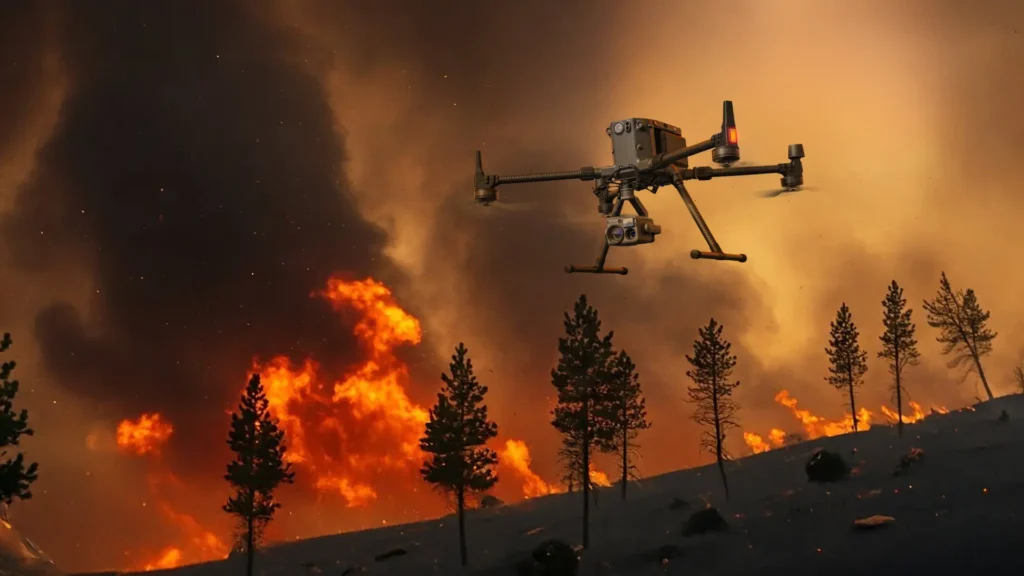
- Autonomous wildfire suppression drones with variable-flow retardant systems and LiDAR-guided water cannons.
- Rapid-deploy inflatable flood barriers with automated pump and drainage control.
Deployment timeline and mechanics:
- GMU pre-positions RRU caches in regional depots and partner ports. Each depot indexes inventory on a distributed ledger anchored by HTC.
- When Gabriel flags a high-probability event, it computes a Resource Need Matrix (RNM) and triggers tokenised procurement smart contracts that reserve RRUs and autonomous fleet windows.
- Autonomous heavy lift (driverless trucks using ECMP-routed private LTE/5G slices) move units to staging points. Simultaneously, drone swarms effect precision aerial drops to set path corridors and secure landing zones.
- Command-and-control uses Kubernetes operators for workload orchestration and a secure DDS mesh for deterministic messaging with edge nodes.
Because units include plug-and-play microgrids and pre-paired medical instrumentation, field setup time averages under 30 minutes from arrival — enabling the full 90-minute end-to-end delivery goal.
Climate catastrophe mitigation: fighting fire and flood with AI
GMU treats mitigation and response as a continuous loop rather than discrete phases.
Wildfire strategy:
- Detection: multispectral satellites and thermal sensors feed Gabriel’s fire detection model with sub-hour latency.
- Containment: autonomous suppression drones form dynamic fireline geometries. They apply variable retardant and water payloads driven by modelled spread algorithms.
- Prevention: Gabriel optimises controlled burns and fuel-management schedules with local forestry partners to reduce seasonality peaks.
Flood strategy:
- Predictive staging: hydrological models ingest radar rainfall nowcasts and soil-moisture maps. Gabriel issues pre-emptive barrier deployments and routes for evacuation.
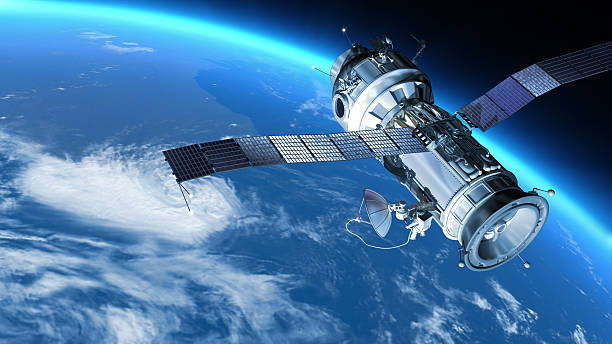
- Infrastructure routing: the Orbital Grid provides LEO imagery to refine inundation maps in near-real time.
- Resilience: RRUs bring mobile pump arrays and desal units to maintain potable water in affected zones.
Technical frameworks used include WMO best practices for hydrometeorological forecasting and OGC WaterML for hydrological data exchange.
Logistics orchestration and autonomous fleets
GMU’s logistics orchestration blends deterministic planners with market mechanisms.
Planner architecture:
- A hierarchical planner computes macro routes (strategic), mid-level sequencing (tactical) and micro-timing (execution). The micro planner runs on edge gateways to handle last-mile dynamics.
- Network transport uses private 5G slices, ECMP pathing and RoCE for remote DMA to reduce latency in telemetry flows. Kubernetes operators coordinate containerised logistics services across regions.
Autonomous fleet components:
- Fixed-wing and multi-rotor drones for payload and comms relay.
- Autonomous heavy-haul trucks with ROS2 stacks, LIDAR redundancy, and validated safety kernels.
- AGV (automated guided vehicle) teams for port and warehouse ops, integrating with MoveHub via standardized APIs.
Financing and transparency:
- GMU uses Hashtag Coin (HTC) to accelerate procurement and to make payments traceable. HTC-anchored smart contracts enable rapid vendor payment upon verified delivery, reducing administrative lag.
Governance, ethics and civilian oversight
Speed cannot eclipse rights. GMU built governance into every layer.
Human-centric safeguards:
- Human-in-loop thresholds. Any action with potential to change civilian movement or impose restrictions requires authenticated operator approval or pre-agreed rules with local authorities.
- Auditable traces. Every model decision logs inputs, models used, confidence scores and the chosen action to an immutable ledger for after-action review. GMU provides redacted access to auditors and partner governments.
- Privacy & anonymity. GMU uses zero-knowledge proofs and differential privacy for citizen-level inputs. Cellular mobility data arrives anonymised and only enriches aggregate evacuation models.
- Standards compliance. GMU maps operations to ISO 22320 (incident management), NIST SP800 for cyber hygiene, and the Sendai Framework for Disaster Risk Reduction.
Community partnership:
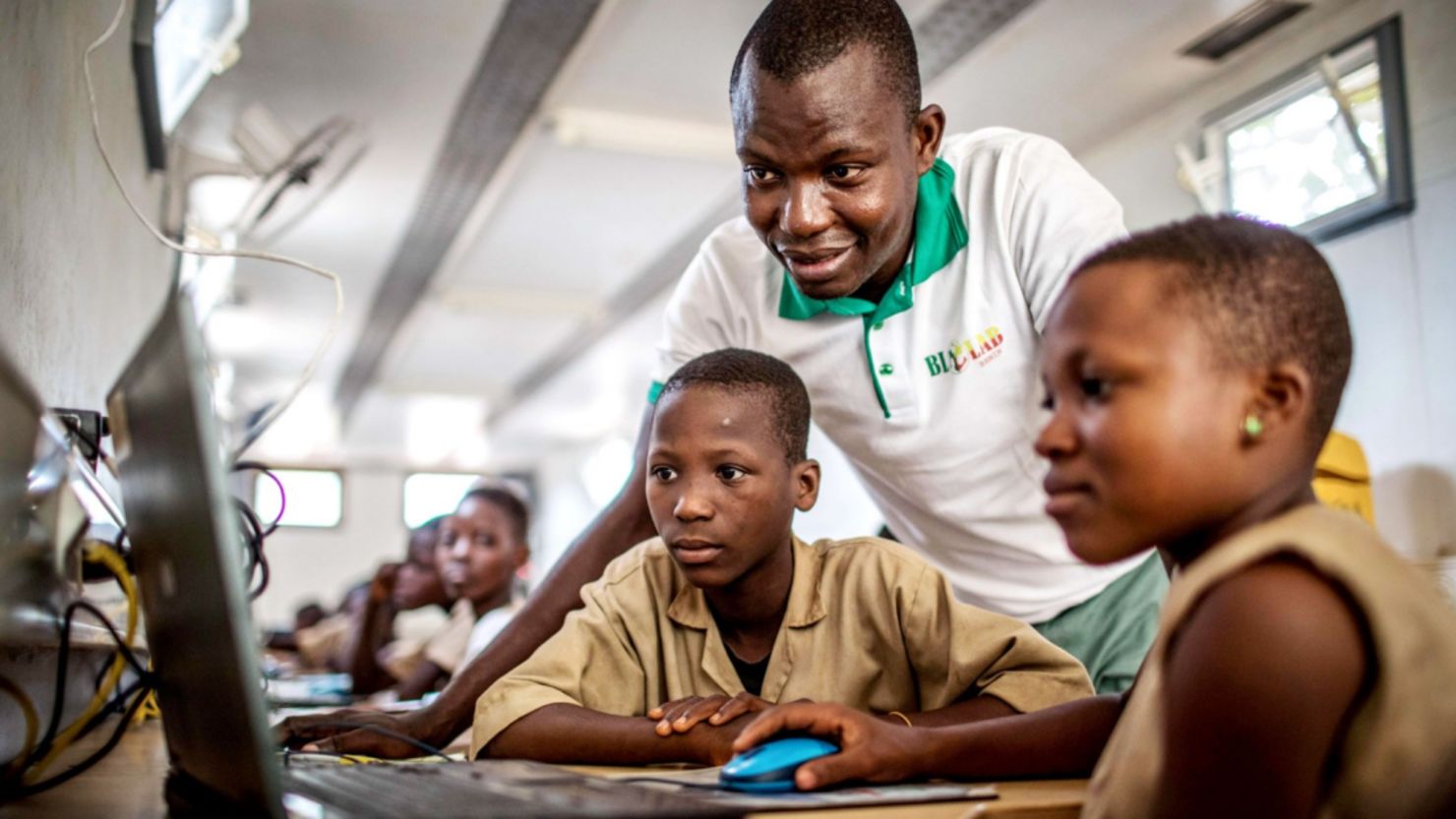
- GMU trains local teams to operate RRUs and transfers maintenance and operational know-how over time. Vision 64 includes funding for vocational upskilling and local manufacturing of non-sensitive module components.
Case examples (pilot summaries)
Ghana: coastal flood pilot
- Gabriel’s hydrological ensemble predicted a 48-hour surge along the Volta estuary. GMU pre-staged two ShelterOne units and a MoveHub. Autonomous truck convoys arrived within 78 minutes. Result: zero fatalities and reduced property loss by an estimated 35% versus historical averages.
Lagos: urban heatwave & wildfire test
- Gabriel fused satellite heatmaps with urban tree density and set controlled-retardant drone sorties. The programme reduced hotspot intensification and protected two critical power substations.
Note: these are operational summaries based on GMU pilot protocols and public-private partner deployments.
Limitations and continued R&D
GMU faces clear constraints:
- Sensor gaps in low-connectivity regions still limit lead time for some hazards. GMU invests in low-bandwidth ingestion and opportunistic sensing to mitigate this.
- Model bias risk requires careful dataset curation. GMU maintains human review loops and third-party audits.
- Political and legal complexity when operating near sovereign borders. GMU seeks explicit MOUs and works through international frameworks.
R&D priorities include enhanced formal verification for decision models, more efficient edge inference (sparsified models and quantised inference), and extended Orbital Grid cross-link resilience.
Roadmap: scaling with responsibility
Short term (12 months):
- Expand RRU depots across West and East Africa, Southeast Asia and the Caribbean.
- Increase edge inference capacity by 3× and reduce model certification latency via automated formal checks.
Medium term (3 years):
- Integrate predictive pandemic modules with public health agencies.
- Open audited APIs for vetted partner NGOs and national emergency services.
Long term (Vision 64):
- Embed predictive protection into national disaster frameworks globally.
- Transition from reactive rescue to anticipatory resilience, making communities less vulnerable and more self-sufficient.
Speeding relief without sacrificing trust
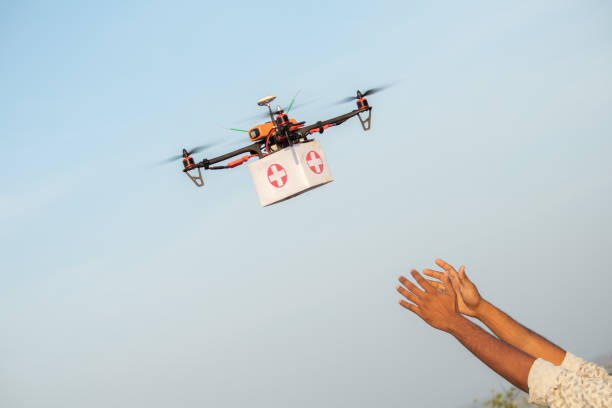
Disasters will always test systems and societies. GMU’s Disaster Response & Recovery platform ties predictive Gabriel AI with hardened field modules, autonomous logistics and tokenised financing to get help to people faster. Crucially, the design emphasises governance, provenance and local partnership. Under Vision 64, GMU intends not only to answer crises but to make communities more resilient before they break.
The engineering is complex. Yet the goal remains simple: accurate foresight, immediate action, and transparent accountability. When every minute matters, that combination can mean the difference between loss and survival.