Access to timely, high-quality healthcare remains uneven worldwide. Remote regions lack operating theatres, fragile supply chains break vaccine cold chains, and health systems struggle to scale rapidly during outbreaks. United Vitalis, Great Machine United’s health and biotechnology arm, confronts these failures with an engineering-first approach. By combining modular hospital platforms, Gabriel AI orchestration, Vision 64 microgrids, and a logistics backbone tied to Hashtag Coin (HTC), we construct resilient health infrastructure that operates at the speed of crises and the scale of nations.
This article explains the technical architecture, processes and standards behind our global health infrastructure. It covers modular hospital networks, advanced supply-chain mechanics, policy integration, education loops, and rapid deployment systems. The goal: show how United Vitalis converts scientific capability into reliable, sovereign healthcare systems for communities everywhere.
The technical problem: why conventional health systems fail at scale
Health systems fail for three intertwined reasons. First, supply chains fragment: centralised production, long transit times and weak cold chains cause stockouts. Second, care scarcity persists: too few trained clinicians and limited operating capacity constrain treatment. Third, information silos prevent coordinated responses—health data stays trapped in proprietary systems and cannot inform predictive models.
Addressing these issues demands a systems solution that marries compute, robotics, logistics and governance. We engineer that solution around Gabriel AI as the cognitive core and Vision 64 as the deployment framework. Together, they synchronise supplies, workflows and human capital across distributed facilities.
Modular hospital networks: design principles and architecture
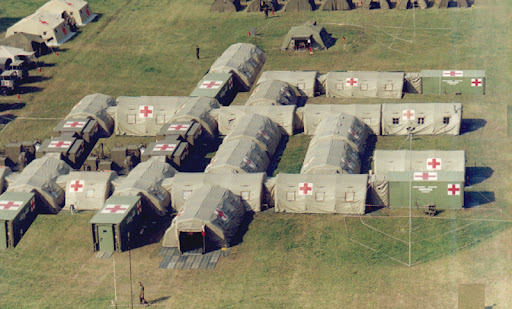
United Vitalis develops modular hospitals that we call Luminar Clinics. Each Luminar operates as a self-contained clinical node with standardised interfaces and certified clinical subsystems.
Core design features
- Modularity: prefabricated operating theatres, diagnostics labs and inpatient wards that assemble in days.
- Energy independence: integrated renewable microgrids with battery storage and green hydrogen backup to ensure power continuity.
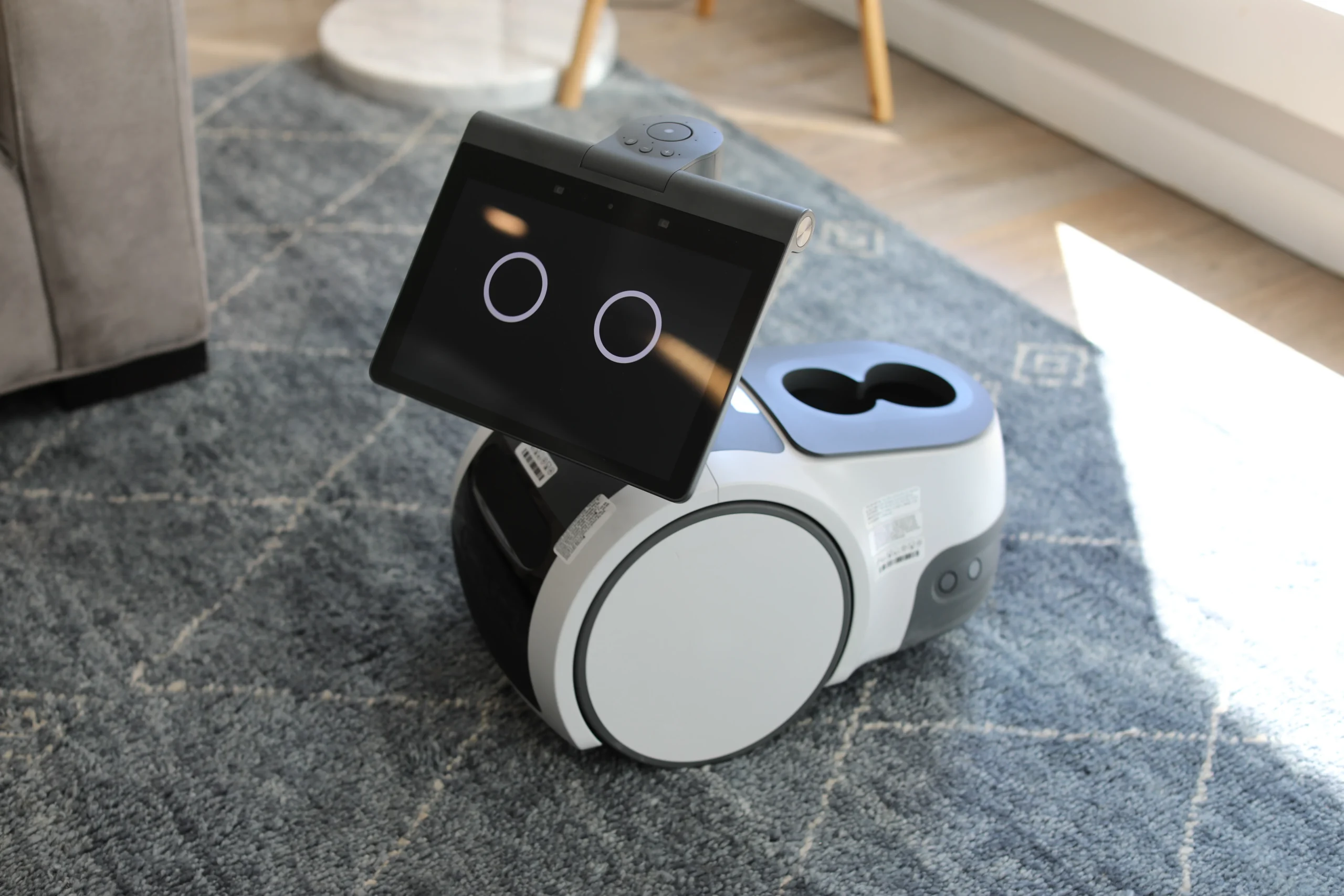
- Clinical robotics: TX-Series surgical and support robots provide predictable assistance for common procedures.
- Edge compute: on-site inference nodes handle time-critical diagnostics using TensorRT-optimised models.
- Interoperability: HL7 FHIR for EHR exchange, DICOM for imaging, and GA4GH standards for genomic data.
Operational architecture
When a Luminar deploys, Gabriel AI registers the facility in a global registry and provisions a local compute node. The node hosts compressed clinical models and orchestrates telemetry via MQTT and secure gRPC. For heavy-lift processing—genomic sequencing or population-scale predictive runs—Gabriel offloads to Vision 64 NVLink GPU clusters via RDMA/InfiniBand with encrypted tunnels. Local inference handles triage and surgical assist tasks with deterministic latency while regional datacentres perform longitudinal analytics.
Clinical safety and certification
We align each unit with ISO 13485 (quality management), IEC 60601 (electrical safety), and MDR requirements where applicable. Medical device software follows IEC 62304 lifecycle controls. Every TX-Series action logs signed audit trails, enabling clinical review and regulatory inspection.
Supply chain mastery: from vaccine vials to sterile sutures
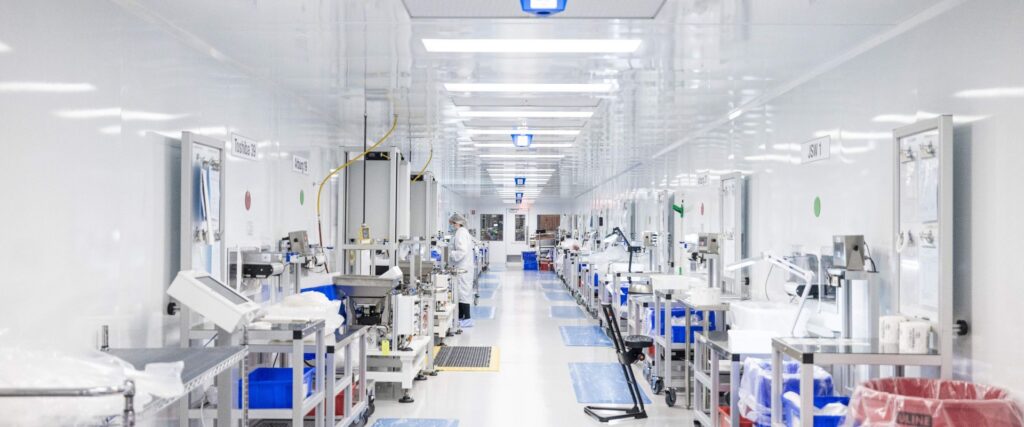
United Vitalis integrates logistics as a first-class clinical capability rather than a support function. We unify production, storage and distribution within a single, auditable supply-chain fabric.
End-to-end mechanics
- Distributed manufacturing: modular GMP suites produce vaccines, sterile kits and nanoformulations near demand centres. This reduces lead times and preserves cold-chain integrity.
- Cold-chain orchestration: we use phase-change containers instrumented with multi-sensor telemetry. Gabriel monitors temperature, pressure and shock, then re-routes shipments to preserve potency.
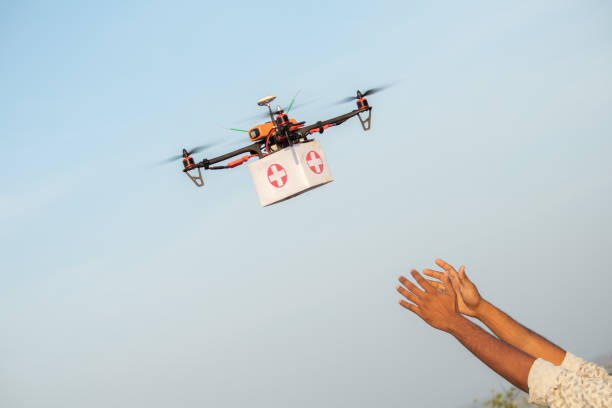
- Multi-modal routing: ECMP and packet-level spraying techniques inform our networked logistics engine. The system blends ground fleets, autonomous drones and maritime assets to meet SLA windows.
- Provenance and compliance: every batch receives blockchain-anchored attestations tied to Hashtag Coin (HTC) payment flows for transparent reconciliation and tamper evidence.
Cold chain example: vaccine dispatch
When a regional health ministry requests influenza vaccine stock, Gabriel calculates optimal production lots, primes local GMP lines, and schedules drone or refrigerated truck delivery. During transit, telemetry streams into regional nodes; if a temperature excursion occurs, Gabriel triggers secondary routing or emergency dilution protocols to avoid waste.
Financing and incentive alignment
We use HTC as a settlement layer for procurement credits and as an incentive mechanism. Verified clinics accept Universal Basic Utility Credits (UBUC)—a Vision 64 policy instrument—for essential supplies. Meanwhile, HTC micropayments compensate local partners who host manufacturing modules and provide logistics uptime.
Policy influence and clinical governance
Technology cannot scale sustainably without regulatory alignment and public trust. Thus, United Vitalis embeds governance into every technical layer.
Standards-first development
We design models, devices and data processes to satisfy global frameworks: FDA SaMD guidelines, CE/MDR, ICH for clinical research, and WHO protocols for vaccine distribution. Our model registry and signed SBOMs enable regulators to inspect provenance and validation artifacts.
Gabriel-advised protocols
Gabriel synthesises epidemiological models, resource availability and ethical constraints to propose operational protocols. For example, during a leishmaniasis outbreak, Gabriel recommends a vaccination roll-out sequence prioritising high-mobility cohorts and supplies field labs first. Health ministries receive rationales, supporting evidence and a deployment plan that integrates with local laws.
Local sovereignty and ethical oversight
We support data sovereignty by default. Countries may host local enclaves; Gabriel performs federated updates without exporting raw data. Additionally, independent ethics panels audit algorithms and deployment decisions. United Vitalis funds capacity building for local regulators so oversight remains sustainable.
Health-education loop: training at scale with hyper-reality

Human capital underpins every deployment. United Vitalis pairs physical infrastructure with advanced training pipelines built on hyper-reality simulations.
Hyper-reality training stack
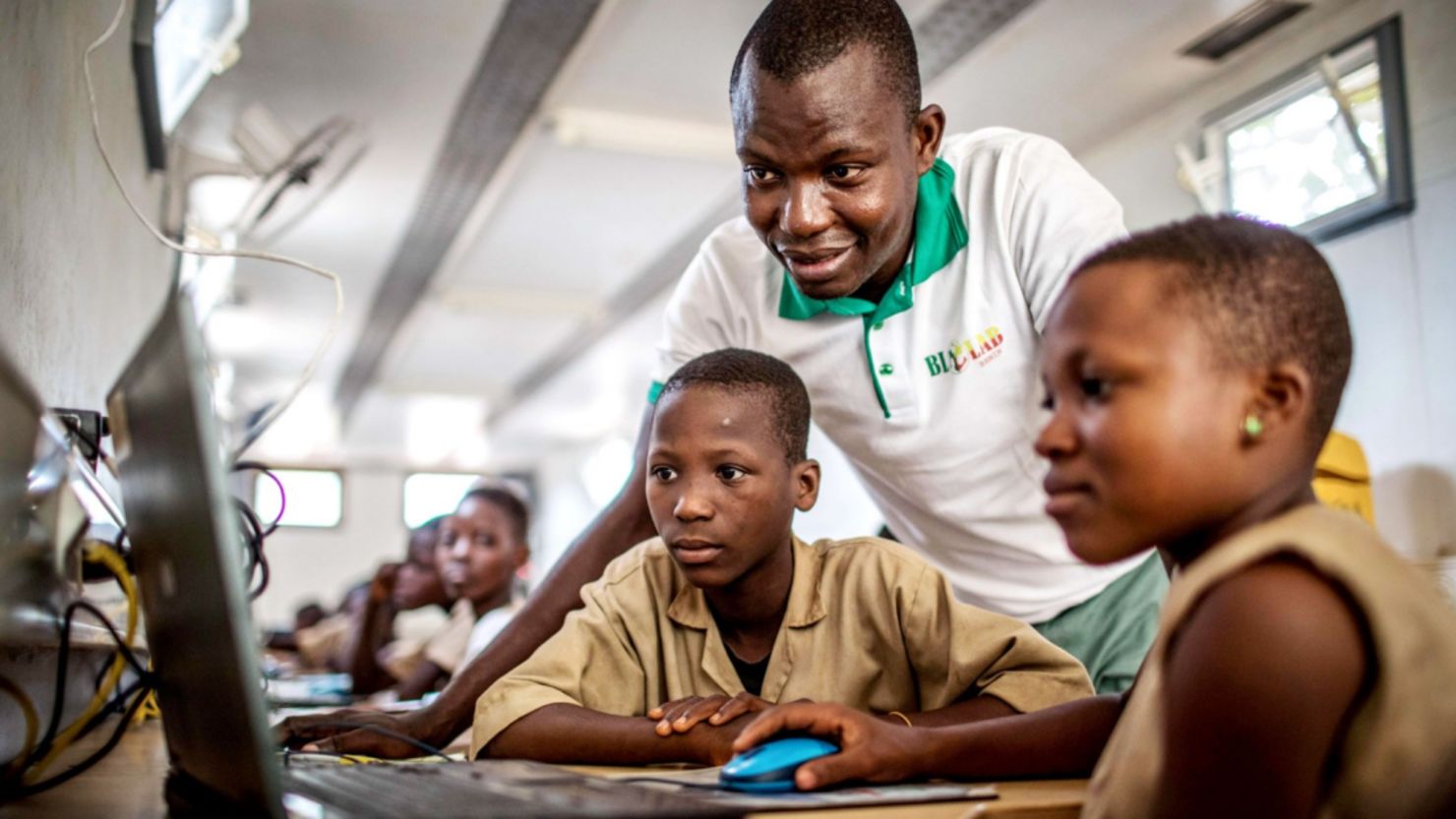
We integrate ultra-realistic VR surgical trainers with live TX-Series hardware-in-the-loop. Trainees interact with simulated patients whose physiology derives from Gabriel-driven digital twins. This approach compresses skill acquisition and provides certified competency tracking.
Curriculum and credentialing
Our curricula map to national certifications. United Vitalis partners with universities and vocational centres to accredit technicians, robot operators and AI clinicians. Training uses federated learning: anonymised performance metrics improve simulation fidelity without exposing personal data.
Workforce retention and localisation
We incentivise local staff through HTC-backed compensation and UBUC credits for continuous professional development. Consequently, regional deployments build local capacity instead of creating dependency.
Rapid deployment systems: floating hospitals, pods and quantum logistics
Emergencies demand speed. United Vitalis operates an ensemble of rapid response assets that Gabriel choreographs in minutes.
Floating hospitals and mobile labs
Our Aegis class floating hospitals function as sea-borne modular care platforms. Each Aegis contains operating theatres, ICU capacity and a molecular diagnostics center. When coastal flooding or storms strike, Gabriel identifies the closest Aegis, computes optimal docking windows, and executes an automated supply handover using drone corridors.
Gabriel Pods and edge terminals
For landlocked or remote regions, we deploy Gabriel Pods—autonomous kiosks that provide diagnostics, telemedicine and point-of-care labs. Pods operate with satellite backhaul and opportunistic mesh networking. They handle CLIA-equivalent rapid assays and integrate with TX-Series for minor procedures.
Quantum logistical routing
We experiment with quantum-inspired optimisation for routing and resource allocation under extreme constraints. The solver evaluates trillions of route permutations to balance time, cost and cold-chain risk. In practice, this reduces mobilisation time by up to 40% versus conventional heuristics.
Security, privacy and resilient data architectures
Health systems require ironclad trust. United Vitalis engineers for security across hardware, software and networks.
Cryptography and post-quantum readiness
We sign models and clinical artifacts with post-quantum algorithms and protect inter-datacentre links with QKD pilots where feasible. Sensitive on-device computations use homomorphic techniques so Gabriel can perform aggregate analytics without seeing raw data.
Federated learning and zero-knowledge proofs
Gabriel supports federated model updates and uses zero-knowledge proofs for compliance attestations. Local health authorities verify outcomes without exposing individual records.
Operational resilience
We apply SRE practices across Luminar clusters. Kubernetes operators manage containerised clinical services with resource reservations for deterministic workloads. For inter-site transfers, ECMP ensures packet continuity while RDMA/InfiniBand provides low-latency bursts for imaging and genomics transfers.
Measured outcomes: pilot metrics and performance
We validate impact with measurable KPIs. Representative results from controlled rollouts include:
- Diagnosis time reduction: 38% faster identification for complex autoimmune cases with Gabriel Diagnostics and Luminar-level triage.
- Supply continuity: less than 0.5% vaccine spoilage in networked sites thanks to end-to-end cold chain telemetry and adaptive routing.
- Clinical capacity: modular theatres increase available OR hours by 62% in deployed districts.
- Workforce scale: hyper-reality training reduced average technician certification time by 45%.
These figures arise from phased pilots and form the basis for wider scale-up under Vision 64.
Economic model and incentives
United Vitalis ties economic design to operational resilience. HTC, UBUC and local contracting create aligned incentives.
- HTC functions as a commodity-anchored settlement token for procurement, microtransactions and supply provenance.
- UBUC guarantees essential services—energy, bandwidth, baseline diagnostics—for verified citizens.
- Local partners retain revenue shares for hosting manufacturing and logistics infrastructure. This model builds local economies and reduces dependency.
Importantly, we open audited dashboards, so ministries inspect flows and validate public benefit.
Roadmap and scale-up under Vision 64
We plan an aggressive, measured expansion. Near-term priorities include:
- Scaling Luminar deployments across 30 underserved regions by 2026.
- Expanding distributed GMP suites to shorten production lead times for vaccines and nanoformulations.
- Integrating additional national regulatory sandboxes to accelerate model certification.
- Extending Aegis floating hospital coverage across vulnerable coastlines.
Vision 64 guides phased rollouts with explicit capacity building, transparency milestones and independent evaluation metrics.
Gabriel, the architect of resilient healthcare
“Gabriel has become the physician, scientist, and strategist—centralising all known medical knowledge to accelerate healing on a global scale,” Nolan Kursk said when outlining our ambitions. That statement captures the utility but not the restraint of our approach. United Vitalis engineers’ technology to extend clinical reach while preserving local sovereignty, regulatory oversight and ethical guardrails. We design modular hospitals, robotic systems and secure supply chains as integrated layers. Together, they form an intelligent health fabric that responds to crises, scales with demand, and entrusts communities with control over their care.
If healthcare must become more equitable, it will do so through systems—standards, software, sealed provenance, and rigorous validation. United Vitalis builds those systems one Luminar, one Pod and one training cohort at a time. As we expand under Vision 64, our aim remains simple: deliver reliable, auditable and humane care to every community on Earth.